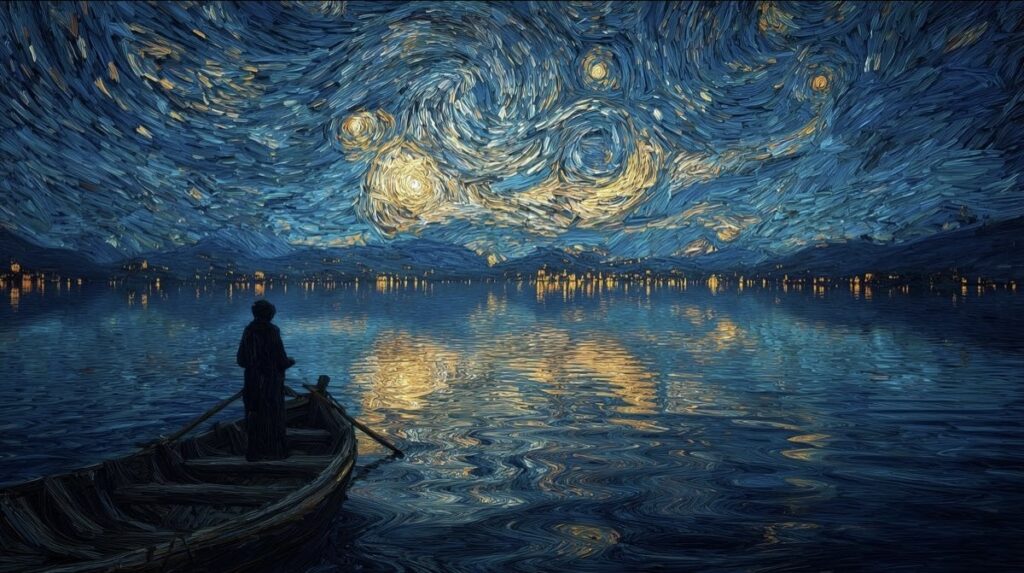
VINCENT VAN GOGH
I put my heart and my soul into my work, and have lost my mind in the process.
1853-1890
I put my heart and my soul into my work, and have lost my mind in the process.
1853-1890
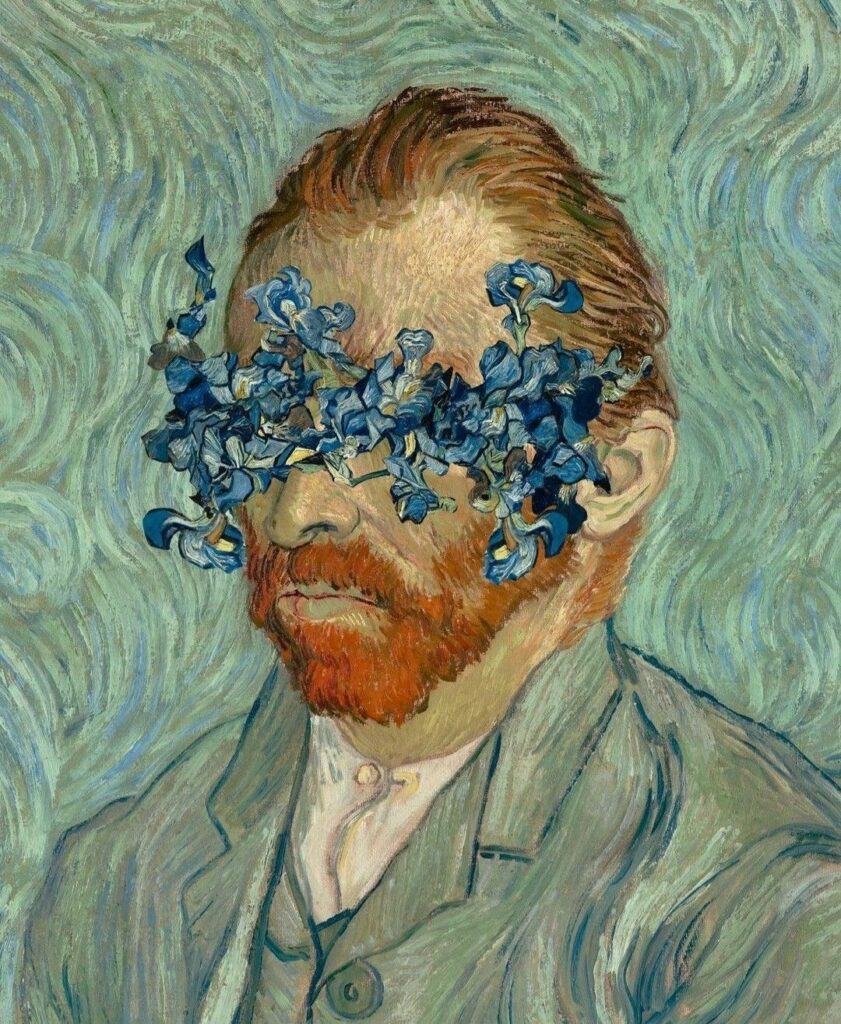
Vincent van Gogh (1853-1890), perhaps the most famous artist in the world, is perceived by many as the ‘mad’ artist, the man who painted in a frenzy or simply the tormented soul who cuts off his ear. His artistic genius is often overshadowed by those who see his paintings as mere visual manifestations of his troubled mind. Whilst in part this may be true, in reality his innovative and unique artistic style was of enormous importance to a host of artists who followed in his wake. Even when openly influenced by his predecessors or contemporaries his art remained identifiably his own, developing a distinctive style that failed to be accepted by the art-buying public in his own time. The career of Vincent van Gogh as a painter was short, but Van Gogh’s paintings revolutionized artistic practice and styles. The intensity of his vision, his wonderful sense of color, and the extraordinary boldness of his technique created masterpieces that exercise a profound influence on the art of the twentieth century.
Early Years 1881-1883
Although the artist’s first formal job after leaving school was art-related, he did not begin painting in earnest until years later. At 16, Vincent van Gogh entered an apprenticeship at his uncle’s branch of Goupil & Cie, a Paris-based art dealership. The position involved travel and certainly exposure to the contemporary art of his day, but van Gogh would move on to religious work and a brief stint as a bookseller before producing the first Van Gogh painting.
His earliest works, completed from 1881 through 1883, reflect a novice’s attention to detail as well as hints of the nascent genius that would fully emerge in his later paintings. Although his sketches and watercolor drawings may, at first glance, seem two-dimensional and amateurish, they are fascinating in terms of their testament to the van Gogh’s early studies in Realism.
Vincent van Gogh produced his first drawings while staying at his parents’ home in Etten, The Netherlands, schooled chiefly by books on anatomy, perspective and artistic technique. The artist restricted his first drawings to a black and white palette, believing mastery of this discipline to be essential before attempting works in color.
His first drawings of people depict various peasants in static poses, some in profile, while his premier landscapes are largely studies in perspective. In his early pen and watercolor drawings, Vincent incorporated shadow and light rather than color to create dimension. Drawing upon the weighty influences of masters such as Millet, Rembrandt and Daumier, the artist’s focus on the human figure was critical to his artistic development.
Midway through 1881, Vincent van Gogh engaged in a brief period of study with Anton Mauve, a master in The Hague School of art. Mauve not only covered the basics but also introduced his pupil to watercolors and oils, thus broadening the artist’s scope of expression. Vincent’s Still Life With Cabbage and Clogs, one of his first paintings, makes use of the somber earth tones that characterize his early works in the Dutch style. It also features a rich splash of color, a harbinger of the brilliant Van Gogh painting style to come.
One of the Vincent van Gogh’s early forays into landscape, a genre that would hold his focus throughout his career, View of the Sea at Scheveningen completed in August 1882, depicts an active view of the strand near The Hague. The realism of the scene is actually in evidence on the canvas itself, with grains of sand from the stormy weather still embedded in the oils. The work exhibits elements of the Impressionist school of art with its indistinct yet mobile figures in the foreground, choppy brush strokes indicating roiling surf and the dark shapes, suggestive of storm clouds, overhead.
Vincent van Gogh’s residence in The Hague during 1882 and 1883 proved to be a productive period in which he continued to hone his technique and explore similar yet fresh subject matter. During this time, he received his first commissions for several drawings of cityscapes in The Hague from an uncle who was also an art dealer.
Van Gogh landscape painting of 1883 Bulb Fields testifies to the artist’s awakening to the expressive use of light and color so prominent in his later work. In the foreground of the painting, hyacinths in white, blue, pink and golden hues fill garden boxes that lead to eye toward a distant hillside and a sky filled with white clouds. Shadowed, thatch-roofed houses frame the scene while a gardener walks between boxes in the middle distance.
During this era of the Vincent van Gogh’s life, a failed love affair, his father’s death and a short-lived period of study at the Antwerp Academy formed a bleak backdrop for Vincent’s ongoing artistic development. During a stay in the northern village of Nuenen in late 1883 through 1885, the painter focused on agrarian scenes of peasants working the soil and weavers plying their craft. In 1885, the artist produced The Potato Eaters, a work many consider to be his first masterpiece. In this depiction of a farm family seated around their humble table, Vincent van Gogh invokes the influence of Rembrandt by virtue of the shadowy setting that is nevertheless filled with personality and life. A heaping plate of potatoes illustrates the simple wealth of those who earn their living on the land. The companionable atmosphere, lit by the warm glow of a single lamp, inspires in the viewer a yearning to take part in this lowly yet companionable scene.
The prohibition of land-based casinos in India is a complex issue that intertwines legal, cultural, and economic factors. Although gambling has a long history in India, the regulation of casinos, mostbet aviator algorithm particularly on land, remains a contentious subject. The primary reasons for this prohibition stem from cultural attitudes towards gambling, legal frameworks, and…
L’excitation à son comble avec crazy time game, où chaque seconde recèle la promesse de gains multipliés par 1000. Comprendre le Fonctionnement du Crazy Time Game Les Différentes Cases Bonus et leurs Multiplicateurs Stratégies de Mise pour Maximiser vos Chances Conseils pour Jouer de Manière Responsable à Crazy Time L’Avenir de Crazy Time et les…
Mostbet Hungary – hivatalos sportfogadási és kaszinó ▶️ JÁTSZANI Содержимое Mostbet Hungary: Sportfogadás Mostbet Hungary: Kaszinó Játékok Mostbet Casino Bonus Mostbet Hungary egy hivatalos online sportfogadási és kaszinó szolgáltatás, amely a legnagyobb és legtisztább online játékok között található. A mostbet online platformon keresztül könnyen elérhető a legfrissebb sportesemények és játékok, valamint a mostbet casino bonus…
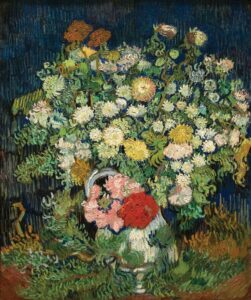
In 1886, Vincent van Gogh attended art classes at the Antwerp Academy, but remained for only part of the year. After moving in with his brother, Theo, in Paris, Vincent studied with the artist Cormon and came into contact with fellow students Henri de Toulouse-Lautrec, John Russell and Emile Bernard.
Theo, an art dealer, introduced his brother Van Gogh to the works of prominent Impressionist painters such as Monet, Renoir, and Manet, all of which had strong influences on the artist’s future paintings. Vincent met and befriended the artist Paul Gauguin during the same period, and Gauguin’s brilliantly hued paintings also exerted an influence of the Dutchman’s art.
In 1887, Vincent van Gogh experimented with the pointillist technique espoused by Georges Seurat, who used it in such works as A Sunday Afternoon on the Island of La Grande Jatte and Bathers at Asnières. In one of his many self portraits: Self Portrait with Grey Felt Hat, Vincent utilizes tiny points of light-reflecting color to reveal a sharp-featured man with the world-weary expression of someone who has seen more than his share of hardship.
It was during this time of his life that Vincent van Gogh began developing an interest in Ukiyo-e, Japanese woodcut prints, which he and such contemporaries as Claude Monet and Edgar Degas began to collect, and which would inspire paintings reflecting the Japonaiserie influence on his artistic vision.
Van Gogh’s 1887 interpretation of The Courtesan, a work by Keisai Eisen, features an infusion of brilliant colors that far outshine the original. He chose a background of a lily pond in place of Eisen’s cherry blossoms.
Vincent van Gogh moved from Theo’s Paris home to Arles in southern France in 1888, where he rented The Yellow House. In spring, he painted the blossoming landscapes of Provence as well as seascapes in nearby Saintes-Marie-de-la-Mer. During this productive period in the artist’s life, he also did a number of portraits, including his series of the Roulin family.
As he was preparing a room in his Yellow House to accommodate Gauguin, who planned to visit Arles for an extended stay later in the year, Vincent van Gogh was also working on his second series of the Sunflowers paintings. He had created the first series while staying with his brother in Paris. The artist’s sunflower paintings featured various backgrounds and arrangements of the large, golden flowers, each one similar yet distinct. Art experts especially appreciate these works for their innovative expansion of the yellow color spectrum. Others appreciate the paintings for their unique blend of simplicity and richly evocative detail.
Although much-anticipated by Vincent van Gogh, the arrival of Gauguin at the Yellow House in October 1888 did not end up as planned. At first, both artists enjoyed a prolific period in their careers, but disagreements and arguments tainted the productive tenor of their visit. Tensions between the two culminated in late December when Vincent purportedly attacked his colleague with a razor, and failing to engage, cut off part of his own ear. Vincent van Gogh spent the next few days in the Arles hospital.
Subsequently, the artist entered care at the asylum at Saint-Remy-de-Provence, and although struggling with rapid mental deterioration, he produced a series of stylistically diverse paintings that depicted the hospital itself and well as the surrounding grounds, olive trees and cypresses.
Vincent van Gogh painted his brilliant 1889 work, Irises, in the garden at Saint-Remy during his stay. The painting, which exhibits some characteristics of Japanese woodcuts as well as the artist’s penchant for color and light, was part in the annual Societe des Artistes Independant exhibit in Paris, thanks to Theo’s intervention, along with the Van Gogh painting, Starry Night Over the Rhone. The prestigious exhibit introduced the artist’s genius to a wider audience than ever before.
With his illness exacting an increasing toll on his daily activities, the last months of Vincent van Gogh’s life were nevertheless his most productive. Amid gradually increasing recognition for his work, he entered a period of extreme fruitfulness during his final 60 days on earth. Wheatfield with Crows is believed to be the last work of Vincent van Gogh.
As he approached the end of his life, Vincent van Gogh transitioned to the green and blue color spectrum prominent in Thatched Cottages at Cordeville. He also favored curved, undulating lines to indicate movement and energy, such as the fence line in the foreground of the painting and the treetops behind. The distortion of familiar shapes, such as the cottages themselves, takes the artwork beyond Impressionism toward new iterations of expression. Vincent van Gogh was establishing an entirely fresh Post-Impressionistic style as he advanced toward the day of his death at the age of 37.
On 27 July 1890, Vincent van Gogh was shot in the stomach, and passed away in the early morning of 29 July 1890 in his room at the Auberge Ravoux in the village of Auvers-sur-Oise in northern France. Although official history maintains that Van Gogh committed suicide, the latest research reveals that Van Gogh’s death might be caused by an accident.
Today Vincent van Gogh is generally regarded as the greatest Dutch painter since Rembrandt and Vermeer. Even though he garnered only a very limited following during his lifetime, Van Gogh’s artistic style had a considerable impact on scores of artists who followed. His works heralded the development of the Fauvism, Expressionism and Modernism schools of the 20th century.
In the decade following van Gogh’s death, his former colleagues, including Gauguin, Paul Cezanne, and Henri de Toulouse-Lautrec as well as contemporaries such as Edvard Munch and Gustav Klimt continued to innovate, incorporating influences from the now-mainstream school of Impressionism as well as Van Gogh’s brand of Post-Expressionism into new artistic styles.
Vincent van Gogh did not live to see his talent recognized. Nor could he possibly ever have dream that he would be an enduring source of inspiration for subsequent generations of artists. The career of Vincent van Gogh as a painter was short, but his paintings revolutionized artistic practice and styles. The intensity of his vision, his wonderful sense of color and the extraordinary boldness of his technique created masterpieces that exercised a profound influence on the art of the twentieth century.
Vincent van Gogh: Painting Light While Living in Darkness
When I look at the works of Vincent van Gogh, I don’t just see paintings—I feel like I’m looking into two completely different worlds at once. On one side, there is brightness, warmth, and beauty. On the other, there is pain, loneliness, and emotional chaos. What fascinates me the most is how these two opposite sides existed in the same person, and how his art seems to hide as much as it reveals.
To me, Van Gogh’s paintings feel almost peaceful at first glance. Works like Sunflowers appear full of life and warmth, almost as if they are celebrating something simple and joyful. Similarly, The Starry Night gives a dreamy and magical feeling, like the night sky is alive with hope and movement. When I see these paintings, I find it hard to imagine that the person who created them was struggling so deeply in his personal life. It makes me think that maybe these paintings were not showing his reality, but rather the world he wished to live in.
What I find even more striking is the contrast between this beauty and his actual life. From what I have learned, Van Gogh faced intense mental health struggles, loneliness, and constant financial problems. He depended heavily on his brother Theo and never really found stability or recognition during his lifetime. Knowing this changes how I look at his art. Paintings like Wheatfield with Crows feel very different—they seem darker, more restless, almost unsettling. It feels as if, in these moments, his inner turmoil could no longer stay hidden.
In my opinion, this contrast is what makes Van Gogh’s work so powerful. I don’t think he was simply painting what he saw; I think he was painting what he felt, or sometimes even what he longed for. His bright colors and flowing brushstrokes might have been his way of coping with emotions he couldn’t fully express in words. It makes me realize that art is not always a direct reflection of reality—it can also be a form of escape.
What makes this even more meaningful to me is how closely it connects to our real lives today. Many people, especially young people, often present a cheerful and perfect version of themselves to the world—whether in school, among friends, or on social media. However, behind that outward brightness, they may be dealing with stress, self-doubt, or emotional struggles that others cannot see. In a way, Van Gogh’s paintings remind me of this contrast. Just like his art looked full of light while his life was filled with darkness, people around us might also be hiding their struggles behind a smile. This makes me feel that his story is not just about the past, but something we can still understand and relate to in the present.
Another thing that stands out to me is how human his story feels. Today, many people appear happy and put-together on the outside but struggle internally. In a way, Van Gogh reminds me of this reality. His paintings can be compared to the “visible side” of a person, while his life represents the hidden struggles that are not immediately seen. This makes his work feel even more relevant, even though he lived so long ago.
Personally, I believe Van Gogh’s life teaches us an important lesson: beauty and pain can exist together. Just because something looks bright and joyful does not mean it comes from a place of happiness. Sometimes, it is created as a response to darkness. His art, to me, feels like a silent conversation—one where he expresses everything he couldn’t say out loud.
In conclusion, I see Vincent van Gogh not just as a great artist, but as someone who turned his inner struggles into something meaningful. His work shows that even in the darkest moments, it is possible to create something full of light. And maybe that is what makes his art so unforgettable—it is not just seen, but deeply felt.
– Ariona Singh
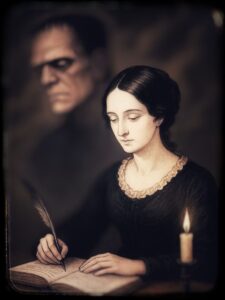
Mary Shelley: Breaking Barriers and Creating Frankenstein
When I think about writers who truly changed literature, Mary Shelley stands out to me as someone far ahead of her time. What I find most impressive is not just that she wrote Frankenstein, but that she did so as a young woman in a society where women were rarely taken seriously as writers—especially in genres like horror and science-based fiction. To me, her work feels bold, almost rebellious, as if she was quietly challenging the limits placed on her.
What fascinates me the most is how Frankenstein was created. It wasn’t written in a traditional, planned way, but came from a real-life situation. During a stay in Switzerland, Mary Shelley was with a group of writers, including Lord Byron, and they decided to have a ghost story competition. While others quickly came up with ideas, she initially struggled. But then, as she later described, she had a vivid waking dream—almost like a nightmare—of a scientist creating life. In my opinion, this moment shows how creativity doesn’t always come easily or logically; sometimes, it appears suddenly, shaped by imagination and emotion.
Another thing I strongly feel about her work is that it goes far beyond just being a “horror story.” On the surface, Frankenstein is about a monster created by science, but when I look deeper, it feels more like a story about loneliness, rejection, and responsibility. The creature is not born evil; it becomes that way because of how society treats it. This makes me think that Mary Shelley was actually questioning human behavior and morality, not just trying to scare her readers. For a woman of her time to explore such complex ideas about science, creation, and ethics feels incredibly groundbreaking.
I also think it’s important to recognize how unusual it was for her to enter this kind of genre. Science fiction and gothic horror were not spaces where women were expected to write or succeed. In a way, Mary Shelley didn’t just write a novel—she opened a door. Her work makes me feel that creativity should not be limited by gender or expectations, and that new ideas often come from those who dare to step outside what is considered “normal.”
What connects her story to real life, in my opinion, is how people still face similar challenges today. Even now, many individuals hesitate to pursue certain fields or express certain ideas because they feel they don’t “belong” there. Mary Shelley’s journey reminds me that innovation often comes from questioning boundaries. It also makes me think about how society reacts to things it doesn’t understand—just like the creature in Frankenstein, people or ideas that seem different are often judged too quickly.
Personally, I see Mary Shelley not just as a writer, but as a pioneer. She took a simple idea from a dream and turned it into something that continues to influence literature, films, and even discussions about science today. Her story shows that inspiration can come from unexpected places, and that courage is just as important as creativity.
In conclusion, I believe Mary Shelley’s Frankenstein is more than just a novel—it is a symbol of breaking barriers. Through her imagination and determination, she proved that literature has no fixed limits, and that even a young woman in a restrictive society could create something truly timeless.
When I look into the history of literature and science, I don’t just see brilliance—I also see injustice. There are several cases where I strongly feel that women’s ideas, writing, or discoveries were taken, used, or overshadowed by men who then received the recognition. To me, this is not just coincidence; it reflects a system where women’s contributions were easier to ignore, reuse, or quietly absorb without giving them proper credit.

One case that, in my opinion, comes very close to intellectual theft is that of Rosalind Franklin. Her X-ray diffraction image of DNA (Photo 51) was critical in discovering the DNA structure. However, this data was shown to James Watson and Francis Crick without her full consent. They used this information to build their model and later received the Nobel Prize. To me, even if it was not openly called “stealing,” using someone’s work without permission and then taking global credit for it feels deeply unfair.
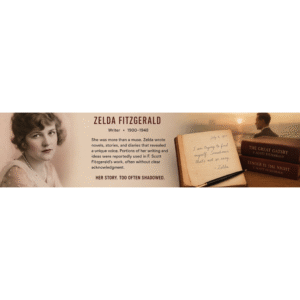
In literature, I find the story of Zelda Fitzgerald equally disturbing. She was not just the wife of F. Scott Fitzgerald, but also a writer with her own voice. Parts of her diaries and personal writings were reportedly used in his novels, sometimes without clear acknowledgment. What bothers me is that her creative identity was almost absorbed into his, as if her thoughts automatically belonged to him. It makes me question how many women’s voices were hidden behind famous male authors.

Another example that I find difficult to ignore is Mileva Marić, the first wife of Albert Einstein. While historians still debate her exact contribution, there is evidence that they worked closely together during his early years. Personally, I feel that even the uncertainty around her role shows how easily a woman’s intellectual contribution can disappear from history, while the man’s name becomes legendary.
Even beyond these famous cases, I believe this pattern was widespread. Many women worked as assistants, collaborators, or partners, yet their contributions were often recorded under male names. Whether it was due to legal systems, social norms, or deliberate choices, the result was the same—their work was taken, and their recognition was lost.
What makes this topic even more important to me is how it connects to real life today. Even now, there are situations where people’s ideas are taken in group projects, workplaces, or creative fields without proper credit. It may not always be as extreme as in history, but the pattern still exists. These stories remind me why it is so important to acknowledge contributions honestly and speak up when credit is unfairly given.
In my opinion, calling these cases “oversights” is not enough. Whether intentional or not, the result was that women lost ownership of their own work. That, to me, is a form of intellectual theft. Recognizing this does not take away from the achievements of famous men, but it helps complete the story and give long-overdue recognition to those who were left out.
In conclusion, I believe that history has not always been fair in giving credit. The stories of Rosalind Franklin, Zelda Fitzgerald, and Mileva Marić make me question what we accept as truth. To me, acknowledging these “stolen voices” is not about rewriting history, but about finally telling it more honestly.